



Nav1.5
Nav1.5, encoded by SCN5A, is the main cardiac voltage-gated sodium channel and predominates the inward sodium current, INa, that drives the fast upstroke of the cardiac action potential[1]. Mechanistically, Nav1.5 supports myocardial excitability and electrical conduction, while its expression, localization, and biophysical properties are regulated through transcript structure, post-translational modification, and interacting proteins[2]. In disease models, SCN5A mutations and altered Nav1.5 function are linked to long QT syndrome, Brugada syndrome, conduction disease, cardiomyopathy, atrial fibrillation, and heart failure-associated arrhythmogenesis[1][2][3]. Compared with related sodium-channel isoforms, Nav1.5 is defined by its cardiac predominance, while the neonatal splice variant nNav1.5 shows distinct relevance in cancer-cell models[4]. In MDA-MB-231 breast cancer cells, nNav1.5 potentiates invasive behavior, and Nav1.5 regulates epithelial-to-mesenchymal transition and invasiveness through salt-inducible kinase-1[4][5]. For experimental applications, nNav1.5 blockers, propranolol, ranolazine combinations, and eslicarbazepine-related compounds have been used to inhibit Nav1.5 current or cancer-cell invasion in vitro[6][7][8].
References:
- [1]. Veerman CC, et al. The cardiac sodium channel gene SCN5A and its gene product NaV1.5: Role in physiology and pathophysiology. Gene. 2015 Dec 1;573(2):177-87. [Content Brief]
- [2]. Rook MB, et al. Biology of cardiac sodium channel Nav1.5 expression. Cardiovasc Res. 2012 Jan 1;93(1):12-23. [Content Brief]
- [3]. Bordachar P, et al. Contributions of a hemodynamic sensor embedded in an atrial lead in a porcine model. J Cardiovasc Electrophysiol. 2011 May;22(5):579-83. [Content Brief]
- [4]. Brackenbury WJ, et al. The neonatal splice variant of Nav1.5 potentiates in vitro invasive behaviour of MDA-MB-231 human breast cancer cells. Breast Cancer Res Treat. 2007 Jan;101(2):149-60. [Content Brief]
- [5]. Gradek F, et al. Sodium Channel Nav 1.5 Controls Epithelial-to-Mesenchymal Transition and Invasiveness in Breast Cancer Cells Through its Regulation by the Salt-Inducible Kinase-1. Sci Rep. 2019 Dec 9;9(1):18652. [Content Brief]
- [6]. Dutta S, et al. Discovery and evaluation of nNav 1.5 sodium channel blockers with potent cell invasion inhibitory activity in breast cancer cells. Bioorg Med Chem. 2018 May 15;26(9):2428-2436. [Content Brief]
- [7]. Lee A, et al. Propranolol inhibits neonatal Nav1.5 activity and invasiveness of MDA-MB-231 breast cancer cells: Effects of combination with ranolazine. J Cell Physiol. 2019 Dec;234(12):23066-23081. [Content Brief]
- [8]. Leslie TK, et al. Inhibitory Effect of Eslicarbazepine Acetate and S-Licarbazepine on Nav 1.5 Channels. Front Pharmacol. 2020 Oct 2;11:555047. [Content Brief]
All Product Categories
-
Nav1.5 Related Products (27)
Related Products (27)

- 1
- 2
-
Flecainide acetate
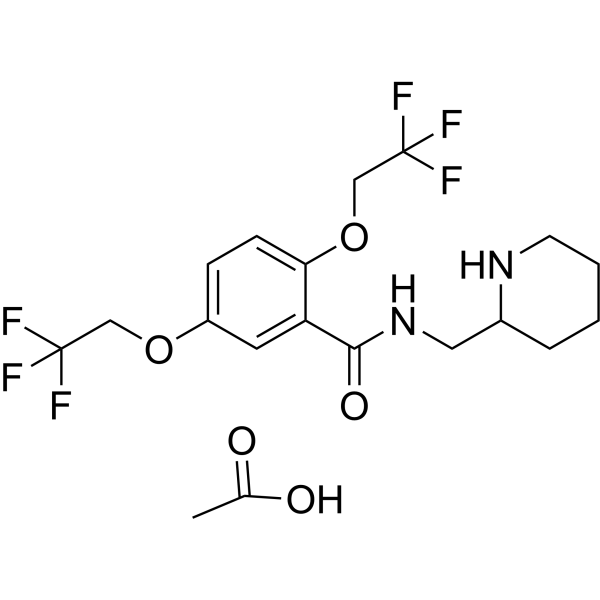 0 ImagesSynonyms: R-818Flecainide acetate (R-818) is a class 1C antiarrhythmic agent especially used for the management of supraventricular arrhythmia; works by blocking the Nav1.5 sodium channel in the heart, causing prolongation of the cardiac action potential.
-
ICA-121431
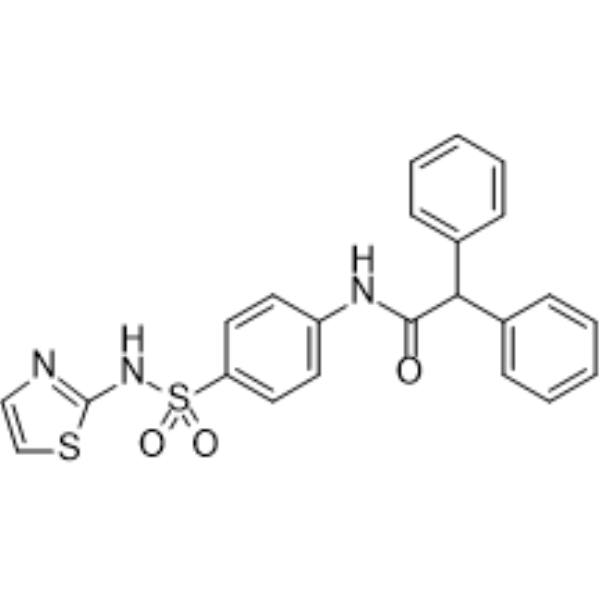 0 ImagesICA-121431 is a nanomolar potent and broad-spectrum voltage-gated sodium channel (Nav) blocker, shows equipotent selectivity for human Nav1.1 and Nav1.3 subtypes with IC50 values of 13 nM and 23 nM, respectively. ICA-121431 shows less potent inhibition of Nav1.2 (IC50=240 nM) and 1,000 fold selectivity against Nav1.4, Nav1.6, and the TTX-resistant human Nav1.5 and Nav1.8 channels (IC50s >10 μM).
-
Bepridil hydrochloride
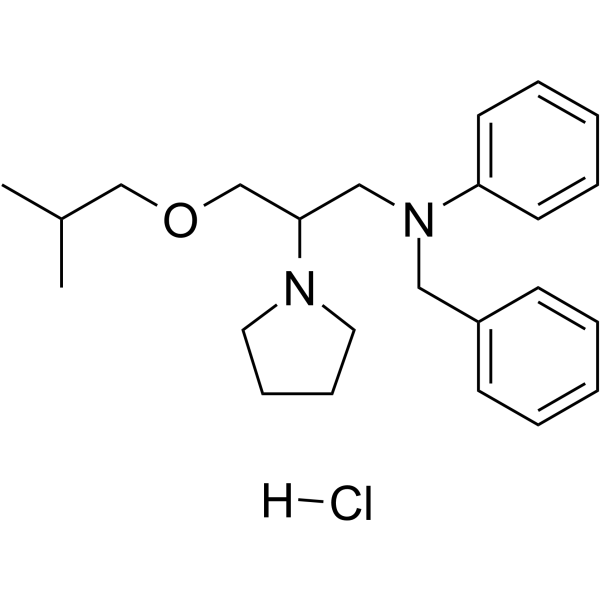 0 ImagesSynonyms: CERM 1978; Org 5730 hydrochlorideBepridil hydrochloride (CERM 1978; Org 5730 hydrochloride) is an orally active non-selective calcium channel antagonist with multi-ion channel blocking activity. Bepridil hydrochloride modulates Calmodulin, the 20S proteasome, T-type/L-type calcium channels, cardiac sodium channels, multiple potassium channels, γ-secretase, β-secretase, and mitoKATP/sarcKATP channels. Bepridil hydrochloride acts as a hydroxyl radical scavenger, regulates mitochondrial and intracellular calcium handling, and exerts antiarrhythmic, antianginal, and cardioprotective effects. Bepridil hydrochloride alters amyloid precursor protein processing, reduces β-amyloid and thalamic calcium levels, restores seladin-1/DHCR24 expression, and improves sensorimotor recovery after cerebral ischemia. Bepridil hydrochloride also exhibits potent inhibitory effects on SARS-CoV-2 replication. Bepridil hydrochloride is used in studies related to stable angina, arrhythmias, cerebral ischemia, Alzheimer's disease, and SARS-CoV-2 infection.
-
PF-06456384 trihydrochloride
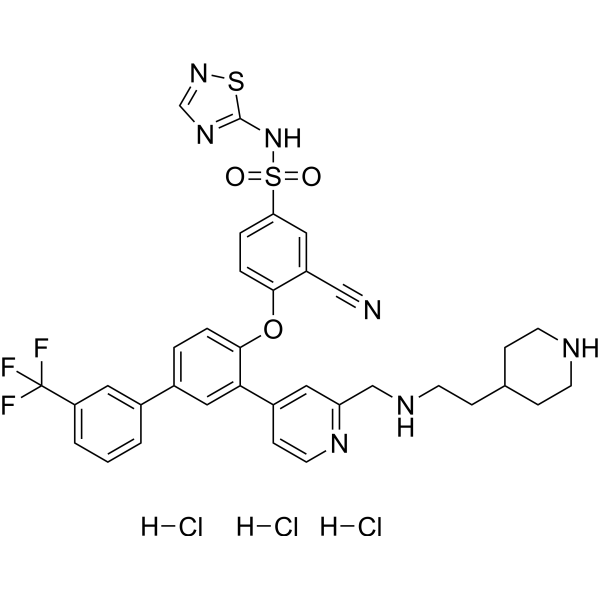 0 ImagesPF-06456384 trihydrochloride is an extremely potent and selective Nav1.7 sodium channel blocker (IC50: 0.01 nM for hNaV1.7; 75 nM for rNaV1.7; <0.1 nM for mNaV1.7). PF-06456384 trihydrochloride shows no significant analgesic efficacy in the mouse Formalin pain model.
-
ProTx II TFA
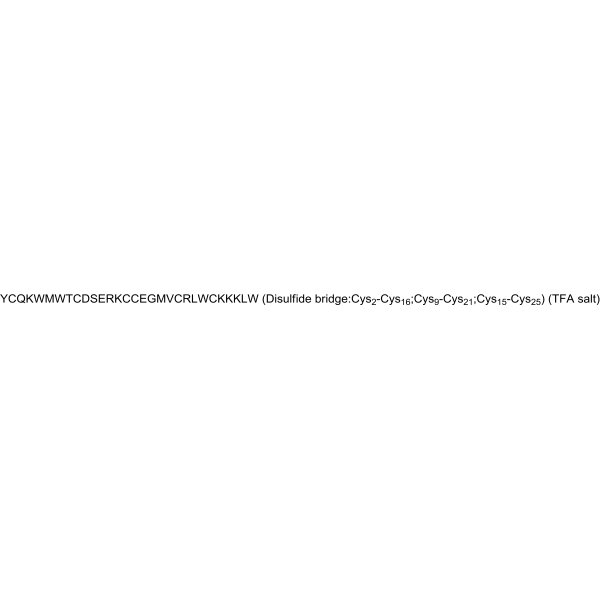 0 ImagesCat. No.: HY-P1221APurity: 99.86%ProTx II TFA is a selective blocker of Nav1.7 sodium channels, with an IC50 value of 0.3 nM and a Ki of 0.389 nM against human NaV1.7. ProTx II TFA selectively blocks spinal cord NaV1.7 by reducing conductance and altering voltage dependence of activation, preferentially binds to the splice region of aNaV1.5, and can also block sodium channel subtypes such as Nav1.4 and Nav1.6. ProTx II TFA alleviates thermal hyperalgesia in diabetic mice and prevents the propagation of action potentials in nociceptors. ProTx II TFA can be used for research related to painful diabetic neuropathy and pain disorders.
-
Bepridil hydrochloride hydrate
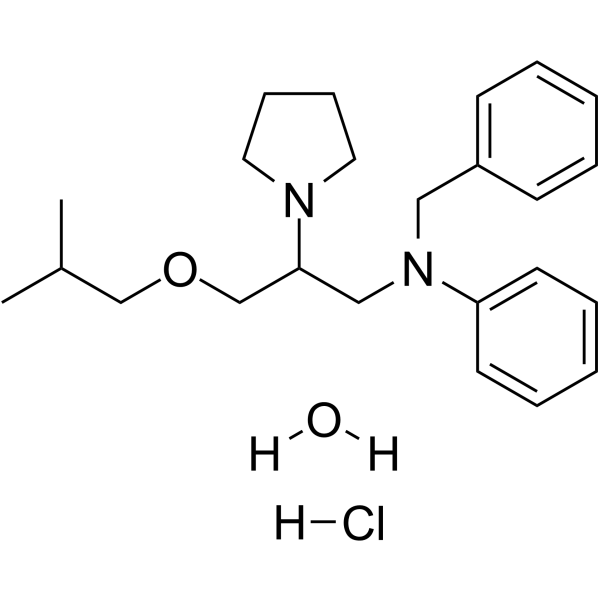 0 ImagesSynonyms: CERM 1978 hydrate; Org 5730 hydrochloride hydrateBepridil hydrochloride hydrate (CERM 1978 hydrate; Org 5730 hydrochloride hydrate) is an orally active non-selective calcium channel antagonist with multi-ion channel blocking activity. Bepridil hydrochloride hydrate modulates Calmodulin, the 20S proteasome, T-type/L-type calcium channels, cardiac sodium channels, multiple potassium channels, γ-secretase, β-secretase, and mitoKATP/sarcKATP channels. Bepridil hydrochloride hydrate acts as a hydroxyl radical scavenger, regulates mitochondrial and intracellular calcium handling, and exerts antiarrhythmic, antianginal, and cardioprotective effects. Bepridil hydrochloride hydrate alters amyloid precursor protein processing, reduces β-amyloid and thalamic calcium levels, restores seladin-1/DHCR24 expression, and improves sensorimotor recovery after cerebral ischemia. Bepridil hydrochloride hydrate also exhibits potent inhibitory effects on SARS-CoV-2 replication. Bepridil hydrochloride hydrate is used in studies related to stable angina, arrhythmias, cerebral ischemia, Alzheimer's disease, and SARS-CoV-2 infection.
-
Bepridil
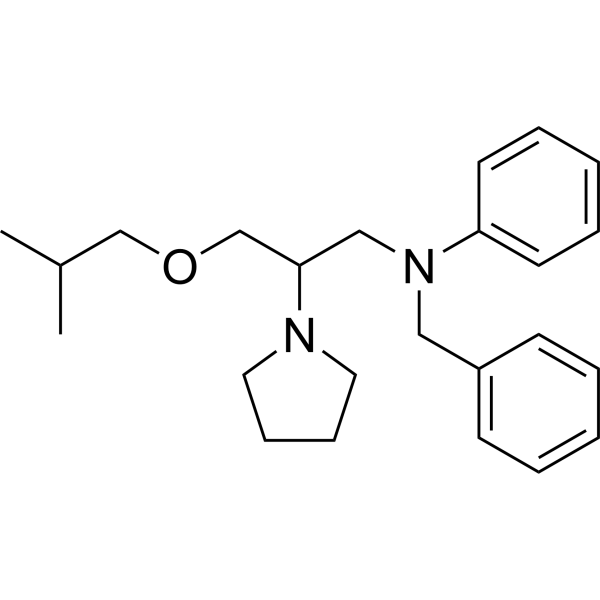 0 ImagesSynonyms: CERM 1978 free base; Org 5730Bepridil (CERM 1978 (free base); Org 5730) is an orally active non-selective calcium channel antagonist with multi-ion channel blocking activity. Bepridil modulates Calmodulin, the 20S proteasome, T-type/L-type calcium channels, cardiac sodium channels, multiple potassium channels, γ-secretase, β-secretase, and mitoKATP/sarcKATP channels. Bepridil acts as a hydroxyl radical scavenger, regulates mitochondrial and intracellular calcium handling, and exerts antiarrhythmic, antianginal, and cardioprotective effects. Bepridil alters amyloid precursor protein processing, reduces β-amyloid and thalamic calcium levels, restores seladin-1/DHCR24 expression, and improves sensorimotor recovery after cerebral ischemia. Bepridil also exhibits potent inhibitory effects on SARS-CoV-2 replication. Bepridil is used in studies related to stable angina, arrhythmias, cerebral ischemia, Alzheimer's disease, and SARS-CoV-2 infection.
-
TC-N 1752
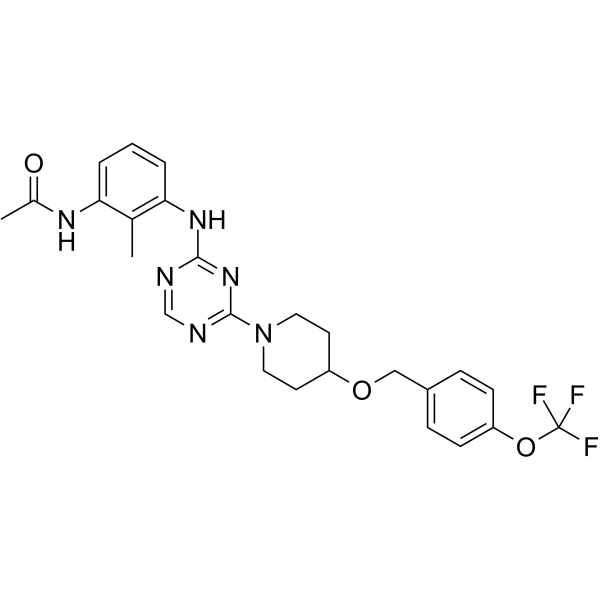 0 ImagesTC-N 1752 is a potent and orally active inhibitor of Nav1.7, with IC50s of 0.17 μM, 0.3 μM, 0.4 μM, 1.1 μM and 2.2 μM at hNav1.7, hNav1.3, hNav1.4, hNaV1.5 and rNav1.8, respectively. TC-N 1752 also inhibits tetrodotoxin-sensitive sodium channels. TC-N 1752 shows analgesic efficacy in the Formalin model of pain.
-
GDC-0310
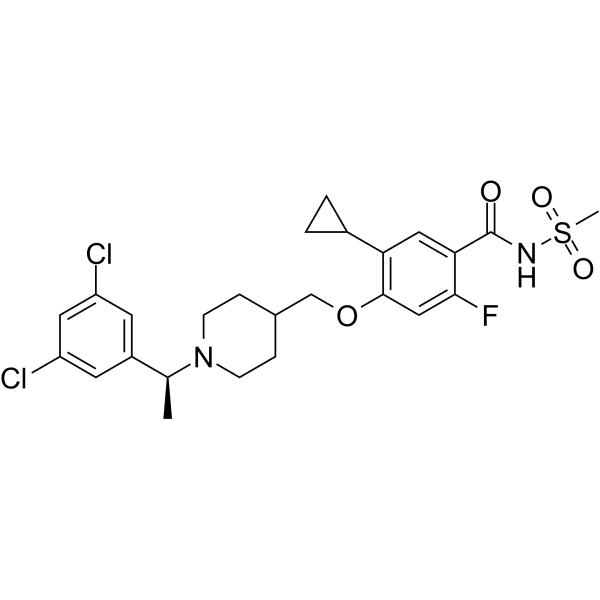 0 ImagesGDC-0310 is a selective acyl-sulfonamide Nav1.7 inhibitor, with an IC50 of 0.6 nM for hNav1.7.
-
Funapide
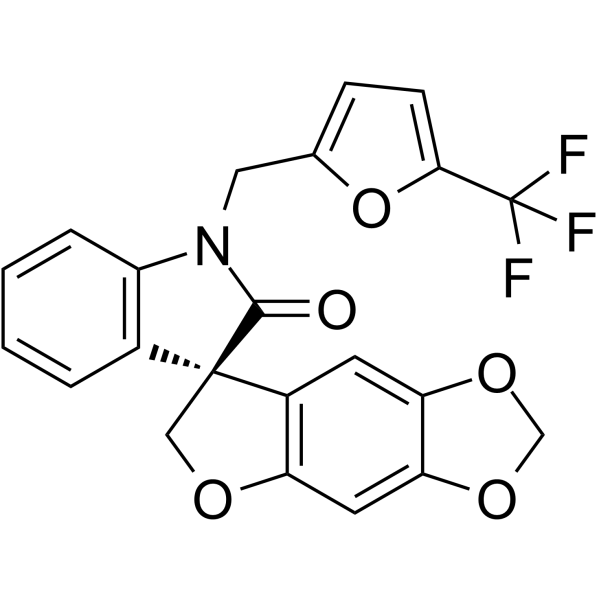 0 ImagesSynonyms: TV 45070; XEN402Funapide (TV 45070; XEN402) is an orally active inhibitor of voltage-gated sodium channels (VGSC) in the peripheral nervous system with IC50 values ??of 84 nM and 54 nM for Nav1.5 and Nav1.7, respectively. Funapide has analgesic effects.
-
AA43279
 0 ImagesAA43279 is an in gamma-aminobutyric acid (GABA) fast-firing interneurons located activator for Nav1.1 channel (SCN1A) with an EC50 of 9.5 μM. AA43279 enhances specific neuronal firing activity in vitro, and exhibits anticonvulsant activity in rat MEST model.
-
GpTx-1 TFA
 0 ImagesCat. No.: HY-P1681APurity: 99.56%GpTx-1 TFA is a peptide-based NaV1.7 sodium channel antagonist isolated from the venom of the Chilean spider Grammostola porter. GpTx-1 TFA demonstrates potent inhibitory activity against the NaV1.7 channel with an IC50 value of 10 nM, while exhibiting excellent selectivity for NaV1.4 (IC50 = 0.301 μM) and NaV1.5 (IC50 = 4.20 μM), showing >20-fold and >950-fold selectivity respectively.
-
ProTx-I
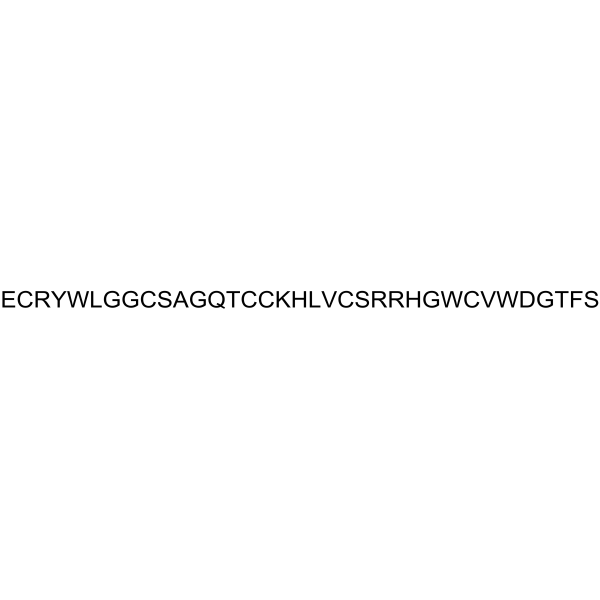 0 ImagesProTx-I is a toxin derived from Thrixopelma pruriens and a peptide inhibitor targeting TTX-resistant sodium channels. ProTx-I interacts with voltage sensors of multiple domains such as NaV1.7, reduces neuronal excitability through allosteric modulation of channel gating and alteration of voltage dependence. The IC50 values of ProTx-I against human NaV1.7, NaV1.2, NaV1.6, and NaV1.5 are 95 nM, 104 nM, 21 nM, and 358 nM, respectively; ProTx-I also potently inhibits Ba2+ currents of hCav3.1, while its inhibitory potency against hCav3.2 is approximately 160-fold lower. ProTx-I is applicable to the research of chronic pain.
-
Sodium Channel inhibitor 1
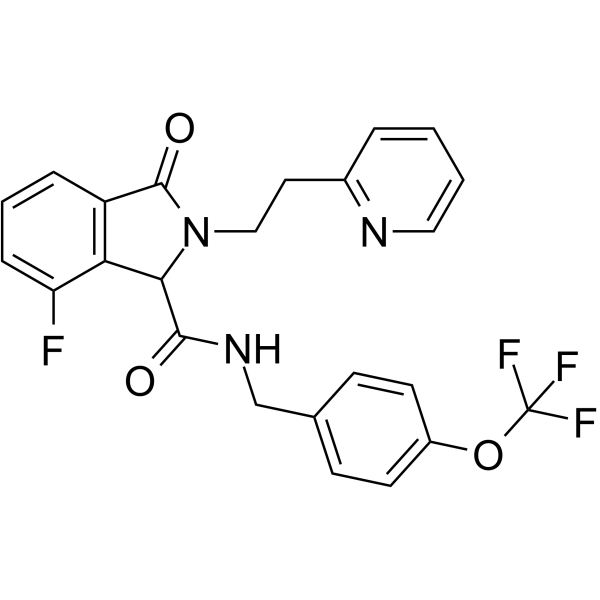 0 ImagesSodium Channel inhibitor 1 is a state-dependent voltage-gated NaV1.7 inhibitor with an IC50 of 0.087 μM. Sodium Channel inhibitor 1 can be used for research of pain.
-
ProTx II
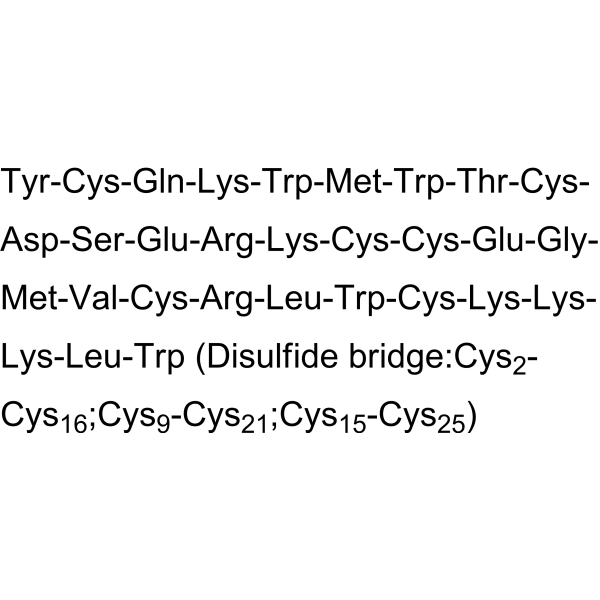 0 ImagesProTx II is a selective blocker of Nav1.7 sodium channels, with an IC50 value of 0.3 nM and a Ki of 0.389 nM against human NaV1.7. ProTx II selectively blocks spinal cord NaV1.7 by reducing conductance and altering voltage dependence of activation, preferentially binds to the splice region of aNaV1.5, and can also block sodium channel subtypes such as Nav1.4 and Nav1.6. ProTx II alleviates thermal hyperalgesia in diabetic mice and prevents the propagation of action potentials in nociceptors. ProTx II can be used for research related to painful diabetic neuropathy and pain disorders.
-
Phrixotoxin 3
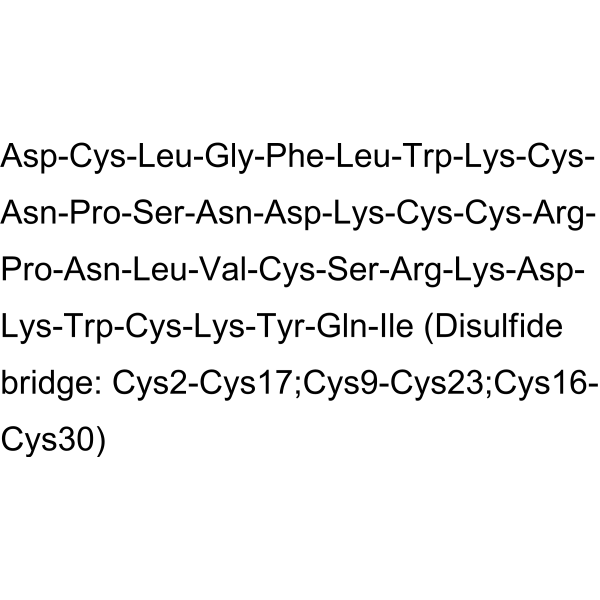 0 ImagesCat. No.: HY-P1218CAS No.: 880886-00-0Phrixotoxin 3 is a potent blocker of voltage-gated sodium channels, with IC50s of 0.6, 42, 72, 288, 610 nM for NaV1.2, NaV1.3, NaV1.4, NaV1.1 and NaV1.5, respectively. Phrixotoxin 3 modulates voltage-gated sodium channels with properties similar to those of typical gating-modifier toxins, both by causing a depolarizing shift in gating kinetics and by blocking the inward component of the sodium current.
-
hERG-IN-3
 0 ImagesCat. No.: HY-175289hERG-IN-3 is an orally active hERG blocker with an IC50 of 44.5 nM. hERG-IN-3 exhibits a Ki for β2-adrenergic receptor of 14 nM. hERG-IN-3 exhibits the skeletal muscle Nav1.4 and sodium channel-blocking activities (IC50 = 4.4 μM, 3-fold increasement than hNav1.5). hERG-IN-3 displays a potent antimyotonic activity in an animal model. hERG-IN-3 can be used for the study of Myotonia Congenita.
-
ERG-IN-7
 0 ImagesCat. No.: HY-184190ERG-IN-7 is a Nav1.5, Cav1.2 and Kv11.1 inhibitor with IC50 values of 10.34 μM, 21.01 μM, and 16.385 μM for human Nav1.5, Cav1.2, and Kv11.1, respectively. ERG-IN-7 prolongs action potentials, reduces conduction velocity, and restores cardiac function. ERG-IN-7 can be used for the research of ventricular arrhythmia.
-
GpTx-1
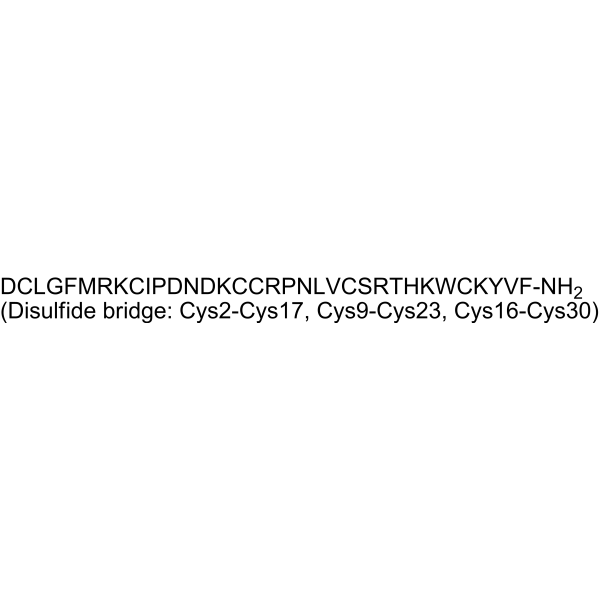 0 ImagesCat. No.: HY-P1681CAS No.: 1661050-12-9GpTx-1 is a peptide-based NaV1.7 sodium channel antagonist isolated from the venom of the Chilean spider Grammostola porter. GpTx-1 demonstrates potent inhibitory activity against the NaV1.7 channel with an IC50 value of 10 nM, while exhibiting excellent selectivity for NaV1.4 (IC50 = 0.301 μM) and NaV1.5 (IC50 = 4.20 μM), showing >20-fold and >950-fold selectivity respectively.
-
MTSET chloride
 0 ImagesCat. No.: HY-W699451MTSET chloride is a membrane-impermeable, thiol-specific reagent that primarily acts as an inhibitor of the Nav1.5 sodium channel. MTSET chloride reduces the peak sodium current amplitude of most mutant Nav1.5 channels, induces a hyperpolarizing shift in steady-state inactivation, and slows the recovery process, but shows no activity against wild-type and non-inactivating Nav1.5 channel mutants. MTSET chloride reacts covalently with T336C mutant P2X2 receptors, partially reversibly blocks ATP-induced cation currents, and exerts no effect on wild-type P2X2 receptors.
- 1
- 2



